
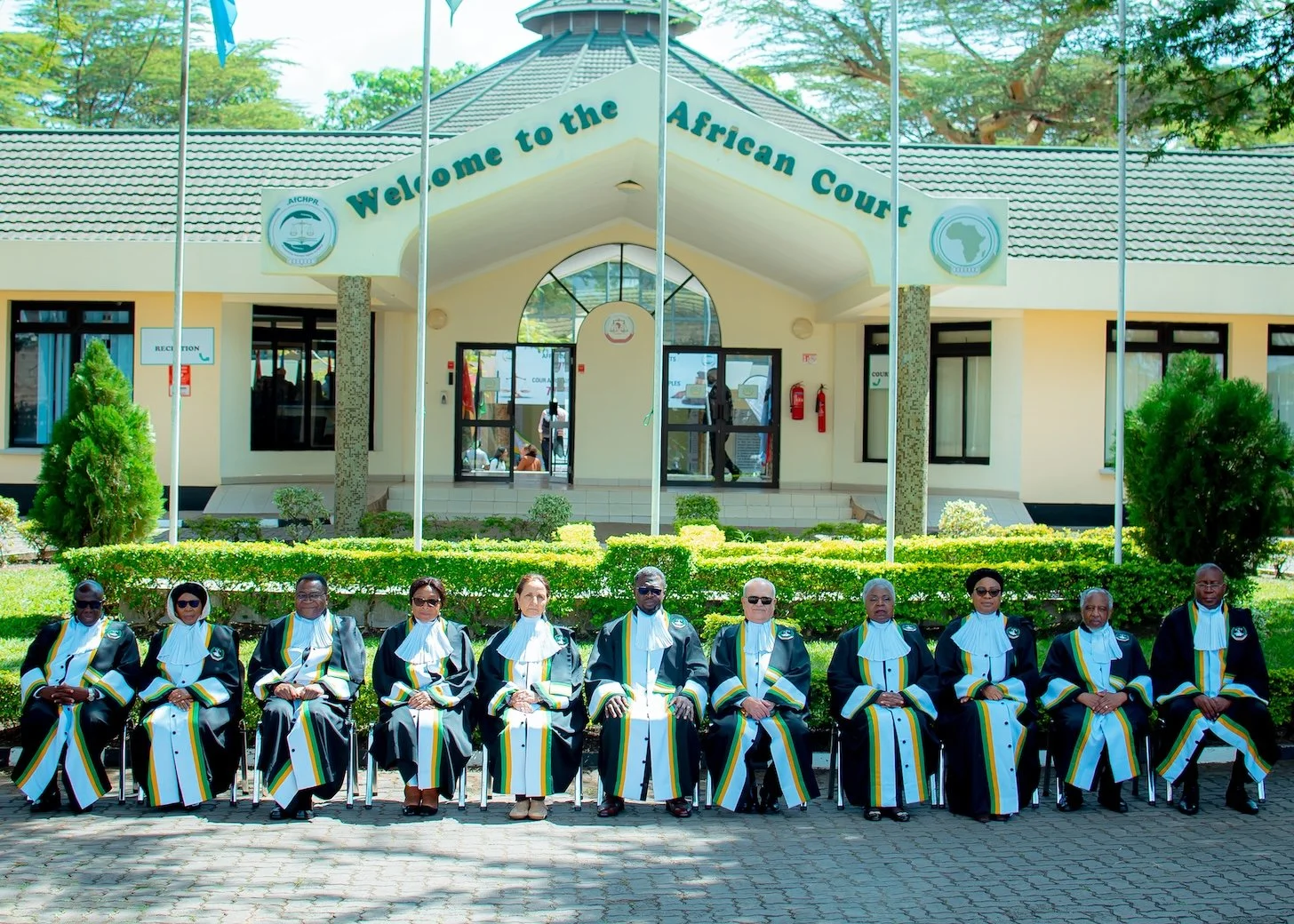
Reflections on the workshop “Human Rights: Rising under Distress? The African Court at 20”, Heidelberg, 14 October 2026
On 14 October 2026, I attended the workshop “Human Rights: Rising under Distress? The African Court at 20”, hosted by the Max Planck Institute for Comparative Public Law and International Law in Heidelberg. Organised in partnership with the University of the Witwatersrand and convened by Helmut Aust, Matthias Goldmann, and Marius Pieterse, the workshop brought together judges and scholars to reflect on the Court’s achievements and future.
A central question was whether regional human rights courts can continue expanding protection while confronting increasing resistance from states. For me, the discussions also raised a broader question: How can the African Court strengthen its legitimacy when its judgments face not only implementation challenges, but also limited recognition within national legal systems?
Expanding Protection Amid Growing Resistance
The workshop examined the relationship between expanding human rights protection and resistance to judicial authority. Human rights courts increasingly address complex issues involving environmental harm, displacement, discrimination, and collective rights, recognising that violations often arise within broader social and political structures.
Yet judgments requiring legislative reform, institutional change, or significant state action may provoke resistance. Participants differed on whether expanding judicial protection contributes to opposition or whether resistance reflects a more fundamental reluctance by states to accept scrutiny.
These complexities are illustrated by the African Court’s 2025 judgment in Centre for Human Rights and Others v. Tanzania, concerning serious violations against persons with albinism. The Court found violations of several rights, including life, dignity, non-discrimination, health, and education.
In a separate opinion, Court President Blaise Tchikaya questioned whether the majority had adequately established state responsibility for violations committed by private individuals, particularly concerning the right to life.
His reasoning highlights an important tension namely how can courts ensure effective protection for vulnerable individuals while maintaining rigorous legal standards for attributing responsibility to states? Judicial legitimacy depends not only on the protection courts provide, but also on the persuasiveness and consistency of their legal reasoning.
Access to Justice and Meaningful Participation
Another important discussion concerned access to the African Court. Under Article 34(6) of its founding Protocol, individuals and non-governmental organisations can bring cases directly against states only where those states have accepted this jurisdiction.
President Tchikaya discussed the tension between states’ ability to withdraw such acceptance and the need to safeguard individual protection. These withdrawals raise fundamental questions about the accessibility of regional justice, particularly where governments themselves are alleged to have violated human rights.
Yet access involves more than the formal ability to bring proceedings. Workshop contributions examined the resources, legal expertise, and representation required to pursue claims, including the extent to which communities retain influence when the African Commission brings proceedings on their behalf.
These discussions raise questions about how legal institutions can ensure that protection respects the safety, dignity, agency, and meaningful participation of affected individuals and communities. Access to justice must therefore be understood not only as the possibility of bringing a case, but also as the opportunity to influence the processes and remedies intended to provide protection.
Judicial Legitimacy, Eurocentrism and the Recognition of African Jurisprudence
One particularly important concern is the limited extent to which national courts engage with the African Court’s jurisprudence. A 2019 study, Kindred Strangers: Why Has the Constitutional Court of South Africa Never Cited the African Court on Human and Peoples’ Rights?, highlighted the absence of citations to African Court judgments in South African Constitutional Court decisions during the period examined. There has since been some progress. In its 2020 New Nation Movement judgment, the South African Constitutional Court drew upon the African Court’s Mtikila judgment concerning freedom of association and independent political candidates.
Nevertheless, as Frans Viljoen argues in his 2025 article, Embedding Regional Human Rights in Adverse Times, national courts’ engagement with African Court jurisprudence remains limited. This raises questions about the place of African regional jurisprudence within domestic constitutional adjudication. Why do African national courts frequently draw upon European and other Western judicial authorities while making comparatively limited use of jurisprudence developed by their own regional human rights institutions?
The disparity invites reflection on Eurocentrism and the continuing legacy of colonialism within legal systems. Although limited citation of African judgments cannot automatically be attributed to racism, it is important to examine whether inherited hierarchies of legal knowledge continue to shape perceptions of judicial authority. African jurisprudence should not require validation through European legal institutions to be recognised as a meaningful contribution to international human rights law.
Viljoen’s analysis offers an important perspective namely that African Court judgments can serve as persuasive interpretive precedents beyond the states directly involved in particular proceedings. Greater engagement by national judiciaries could therefore strengthen regional human rights standards without requiring every judgment to bind every state. Strengthening legitimacy involves challenging unequal patterns of judicial recognition while improving the accessibility, consistency, and practical relevance of African jurisprudence.
Implementation: From Judicial Recognition to Meaningful Justice
The implementation of judgments remains another significant challenge. A compelling example is African Commission on Human and Peoples’ Rights v. Kenya, commonly known as the Ogiek case. In its landmark 2017 judgment, the Court found that Kenya had violated several rights of the indigenous Ogiek community, including rights to property, culture, natural resources, and development, in connection with their ancestral lands in the Mau Forest.
In 2022, the Court ordered reparations, including compensation and measures to secure collective land rights. However, in December 2025, it found that Kenya had failed to comply with important aspects of its earlier judgments. The case illustrates the gap between judicial recognition of rights and their effective implementation. During the workshop, President Tchikaya discussed the Court’s use of public hearings to review compliance, including in the Ogiek litigation. European Court of Human Rights Judge Vasilka Sancin identified this practice as a possible source of learning for the European human rights system.
I found this observation particularly significant. Discussions about regional human rights institutions frequently emphasise what African courts might learn from Europe. Yet African judicial practices can also contribute valuable innovations to international human rights adjudication. Nevertheless, public hearings alone cannot guarantee compliance. Implementation requires sustained institutional engagement, political commitment, and meaningful participation by affected communities.
The Court’s legitimacy must therefore also be assessed through the experiences of those seeking justice. Judicial recognition is important, but rights must ultimately translate into effective remedies.
Looking Ahead
The Heidelberg workshop highlighted the interconnected challenges confronting the African Court as it enters its third decade. Expanding human rights protection is essential, but judicial authority cannot be sustained through progressive jurisprudence alone. It also requires meaningful access, national judicial engagement, state cooperation, and effective implementation.
In my view, strengthening the Court’s relationship with domestic legal systems is particularly important. Greater recognition of African jurisprudence could help embed regional human rights standards within national judicial practice, while challenging the assumption that authoritative human rights interpretation must primarily originate elsewhere.
At the same time, legitimacy cannot be secured through judicial recognition alone. It must also be built through the confidence of affected individuals and communities, whose experiences ultimately reveal whether legal protection has practical meaning. The challenge for the African Court’s next twenty years is therefore not simply to expand human rights protection, but to ensure that its jurisprudence is recognised, its judgments are implemented, and the rights it protects translate into meaningful justice.
This article reflects on discussions at the workshop “Human Rights: Rising under Distress? The African Court at 20”, held at the Max Planck Institute in Heidelberg on 14 October 2026. The interpretations and reflections expressed are my own.