

Our Approach
Survivor-Centred Justice
The Foundation of Our Work
Survivor-centred justice is not a standalone service — it is the legal, ethical, and methodological foundation of our entire practice. Grounded in international human rights law and international criminal law, and informed by survivor experience and context, it shapes how we design, assess, and strengthen justice processes across all levels, from international prosecutions to domestic systems and community-based mechanisms.
We proceed from the principle that individuals affected by violence are rights-bearing actors entitled to justice, protection, and remedy under established legal frameworks. Their participation is not optional but integral to legitimate, effective, and meaningful justice processes. A survivor-centred approach requires that systems are accessible, responsive, and capable of recognising the lived realities of those they serve.
Justice, in this context, must do more than adjudicate, it must uphold accountability, enable meaningful participation, and contribute to restoration. This includes adherence to legal standards on access to justice, the right to truth, and the right to reparations, while ensuring that processes are both procedurally sound and grounded in dignity, safety, and respect.
Who We Work With
Pursue Peace collaborates with a diverse range of partners committed to advancing justice, accountability, human rights and sustainable peace. We believe that meaningful and lasting change is achieved through collaboration across sectors, disciplines and communities.
Governments and Public Institutions
We support national, regional and local government institutions in designing and implementing policies, programmes and reforms that promote justice, accountability, human rights, institutional strengthening and sustainable peace.
International and Regional Organisations
We work with international organisations, regional bodies and multilateral institutions to address complex challenges related to transitional justice, conflict prevention, peacebuilding, human rights protection and post-conflict recovery.
Courts, Tribunals and Accountability Mechanisms
We provide expertise and strategic support to judicial institutions, accountability mechanisms and justice initiatives seeking to strengthen the rule of law, combat impunity and advance survivor-centred approaches to justice.
Civil Society Organisations and NGOs
We partner with civil society organisations, community-based groups and non-governmental organisations working to promote human rights, social justice, reconciliation, inclusion and democratic participation.
Faith-Based Organisations and Religious Leaders
We work with faith-based organisations, churches, religious leaders and interfaith networks because they often play a vital role in healing, reconciliation, moral leadership, community trust and peacebuilding. In many societies, faith communities are deeply connected to affected communities and can help create safe spaces for dialogue, dignity, forgiveness, accountability and social transformation.
Universities, Research Institutes and Educational Organisations
We collaborate with universities, research institutes and educational organisations through research partnerships, teaching, curriculum development, training programmes, guest lectures and public engagement initiatives. We are committed to bridging academic knowledge and practical action in the fields of transitional justice, human rights and peacebuilding.
Foundations, Donors and Philanthropic Organisations
We support foundations and funding partners seeking to maximise the impact of their investments in justice, peacebuilding, human rights, survivor support and institutional reform.
Survivor Groups and Affected Communities
At the heart of our work are survivors, victims and communities affected by conflict, violence and injustice. We strive to ensure that their voices, experiences, dignity and agency inform every stage of policy development, research, programme design and implementation.
Private Sector and Professional Networks
We engage with responsible businesses, professional associations and cross-sector networks that seek to strengthen human rights, ethical governance, social responsibility and sustainable development through their operations and partnerships.
Our Approach to Partnership
We recognise that every organisation and community brings unique perspectives, expertise and lived experiences. Pursue Peace works collaboratively with partners to develop context-specific, evidence-based and survivor-centred solutions that contribute to justice, reconciliation and lasting peace.
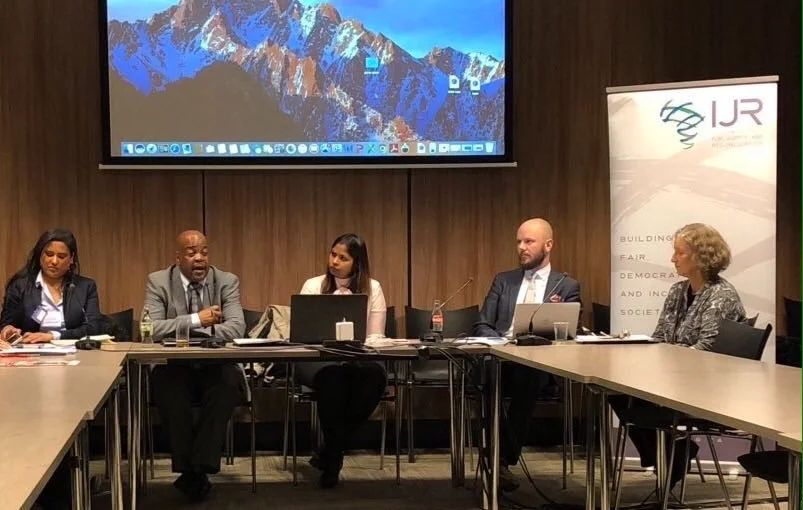
Why We Work With These Partners
Lasting peace, justice and social transformation cannot be achieved by any one institution acting alone. The challenges faced by societies emerging from conflict, violence, exclusion or systemic injustice are complex and interconnected. They require collaboration across sectors, disciplines and communities.
At Pursue Peace, we believe that meaningful change occurs when those who create knowledge, those who make decisions, those who implement programmes and those who are directly affected by injustice work together toward shared goals.
We work with governments because public institutions play a critical role in establishing the legal, policy and institutional foundations for justice and peace.
We work with international and regional organisations because they provide important platforms for cooperation, norm-setting and collective action across borders.
We work with courts, tribunals and accountability mechanisms because accountability is essential for restoring trust, affirming human dignity and preventing future violations.
We work with civil society organisations because they often serve as the bridge between communities and institutions, ensuring that local voices and experiences inform policy and practice.
We work with faith-based organisations and religious leaders because they often hold deep community trust and can play an important role in healing, reconciliation, ethical leadership and rebuilding relationships after conflict or injustice.
We work with universities, researchers and educational institutions because rigorous research, critical reflection and education help generate the knowledge needed to address complex social challenges and prepare future leaders.
We work with foundations and donors because sustainable impact requires long-term investment in people, institutions and innovative approaches to justice and peacebuilding.
We work with survivor groups and affected communities because those who have experienced harm possess unique knowledge, perspectives and resilience. Their voices must remain at the centre of any effort to achieve meaningful justice and reconciliation.
We work with responsible private-sector actors because businesses shape the environments in which people live and work. Their influence over labour conditions, community dynamics, and resource flows means they can either contribute to harm or play a constructive role in promoting accountability, ethical practice, and social stability. They also have a responsibility towards survivors, whether as employees, community members, or individuals affected by business operations to ensure safe reporting mechanisms, access to support, and practices that prevent further harm and uphold dignity.
Above all, we work with these partners because we believe that justice and peace are collective responsibilities. By bringing together diverse expertise, experiences and perspectives, we help create solutions that are practical, inclusive, survivor-centred and capable of delivering lasting impact.
In Essence
We engage this ecosystem because each holds a piece of the justice puzzle.
When aligned and when survivors remain at the centre these actors can collectively enable accountability, rebuild trust, and contribute to lasting, justice and peace.